Thursday, May 19, 2011

Simple organic raw cultured butter making

Benefits of butter are many, and the bad image butter has had over the past decades is slowly starting to disappear. Butter is extremely good for you, it fights infections, is a great source of certain vitamins and has various other health benefits I will not go into here (just google "benefits of butter" for more information). Organic raw cultured butter is the best you can get, and it is extremely easy to make.

All you need is raw organic cream from your cow (if necessary save it up for a few days to get a decent amount). In this example I use 1.25 litres. Pour the cream into a 2 litre glass jar. You can add yoghurt or kefir cultures at this stage, but I just let it sit as it is on the counter for 1 day and 2 nights to culture.

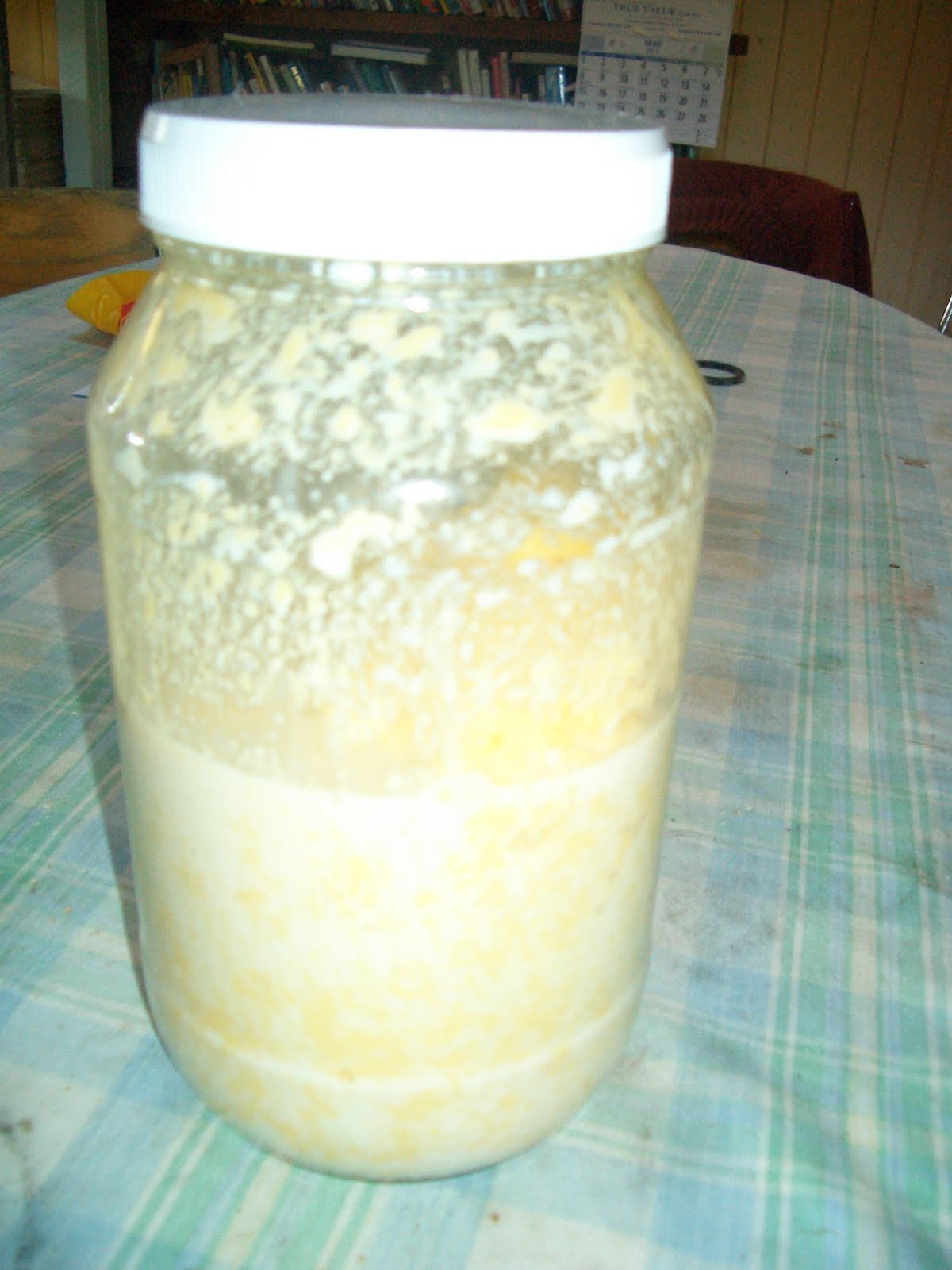
This is how the cream can look after a day and 2 nights. I now add a heaped tablespoon of seasalt to the cream (you can skip this if you prefer unsalted butter). I ensure the lid is tightly sealed, then wrap the jar in a tea towel, so that if the lid is not entirely liquid proof, I do not get any cream on my clothes...


I place one hand on the lid end and the other hand on the bottom end of the jar. Then I shake it slowly from side to side by moving the jar up and down like so:


Ensure the cream goes from top of the jar to the bottom of the jar in a nice steady rhythm. No need to rush, otherwise you will get tired before the butter has formed! The cream will get very thick at some point and will barely move inside the jar. Just keep going until it starts moving again. It will start sloshing around now, because the buttermilk will separate from the butter. It takes about 5 minutes of steady movement to get to this point.

Keep going for a bit longer until there is a fair amount of buttermilk that has separated from the butter. Don't worry, you'll know when it is time to stop! The butter and buttermilk now looks like this (see left)


I now put a wooden spoon into the glass jar to hold back the butter while I pour off the buttermilk. I use the buttermilk to make pancakes on weekends. After pouring off as much of the buttermilk as possible, I spoon the butter out of the jar with the wooden spoon, squeezing it against the side of the jar to get rid of any excess buttermilk.


I put the butter into a container, push the butter down in the container and drain any excess buttermilk. Store the butter and the buttermilk in the fridge. They both should keep at least a few weeks in the fridge. Enjoy!

Sunday, May 15, 2011

Native bees to help our garden

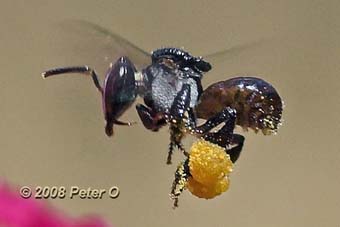
Photo from www.aussiebee.com.au
As many of you already know, the world's bees are in trouble. Colony collapse disorder, predator beetles and probably a range of other factors that have to do with our lack of care for the earth is slowly annihilating the world's bee population. We have definitely noticed a decrease in bee activity in our garden this year and are extremely concerned about this problem, since a lot of our plants depend on bees to produce fruit or vegetables. So we were very excited to discover a native beehive in a log on our property.

Most Australian native bees are solitary. That means they do not live in a hive but live alone in small holes in logs and other small crevices. Those we try to encourage into our garden by drilling small holes into timber in which they can nest. Solitary bees do not store honey.
Honey is stored in hives of social bees during the warmer times of the year so that the bees can survive in the colder times of the year. Due to the winters in Europe being long and cold, the European honey bees make a lot more honey (70 - 100kg per year per hive) than our Australian native bees (only about 1kg per year per hive). Our native bees are only found in the warmer areas of Australia. The hive we found was the Trigona Carbonaria variety (Australian Stingless bees).

Tom cut both sides of the log off so only the part with the hive in it was left. Then he screwed blocks of wood to each side to close it off, leaving their natural entrance open. We had to take the hive off the property for about 3 weeks, and then bring it back and put it in its permanent spot in our vegie garden upon return. This was to ensure they would not try and fly back to where they used to be on our property. Tom mounted a little roof over their entrance, to keep the weather out for them (pampered bees...) and found a beautiful spot for them in our vegie garden, under a mandarin tree.

Here you see our beautiful little beehive, blending in perfectly with its surroundings. The bees only get active at around 18 degrees Celsius, so we had to do a little bit of clearing in our garden to ensure they have enough winter sun.


Our hive of bees have been in this spot for a few months now. Tom is keen to split the hive in the next few months. Apparently the half without a queen create a new queen to ensure their survival. Tom has made up some boxes to make the splitting process easier in the future:

This is one half of the new hive. The idea is to add the split off part of the hive into this box and then add another box on top so the hive can grow:


There will be a floor on the bottom and a lid for the top, possibly with some perspex in between the lid and the top of the boxes, to catch the honey. There will also be an entrance added to the box for the bees to get in and out.

Here is the future hive with the honey "super" (no lid yet). As you can see the wood used is very thick, which will be ideal for insulation for the bees, since they are sensitive to temperature fluctuations.


We are looking forward to starting the splitting process in the next few months. Watch this space for updates on this process!!


This is our existing hive's entrance. The photo on the left was taken early in the morning when it was too cold for the bees to come out. The photo on the right was taken later in the day with the bees coming in and out. The bees are a lot smaller than the European honeybees. The little dark dots you see are their bodies reflecting the light.

If you would like more information on Australian Native Bees please go to Australian Native Bees website.


Tuesday, May 10, 2011

Creating a garden bed with compost and mulch

Today we needed to get some broccoli seedlings into the ground. Normally we plant them in various existing beds to have variety in each bed, but today we had to tidy up and plant out a new bed. The bed housed a chilli bush that was taking over, so we moved the bush, tidied the bed and added compost.

The wheelbarrow was dirty and sticky from the compost, so it was washed with water. The resulting nutrient rich water was poured onto the bed.

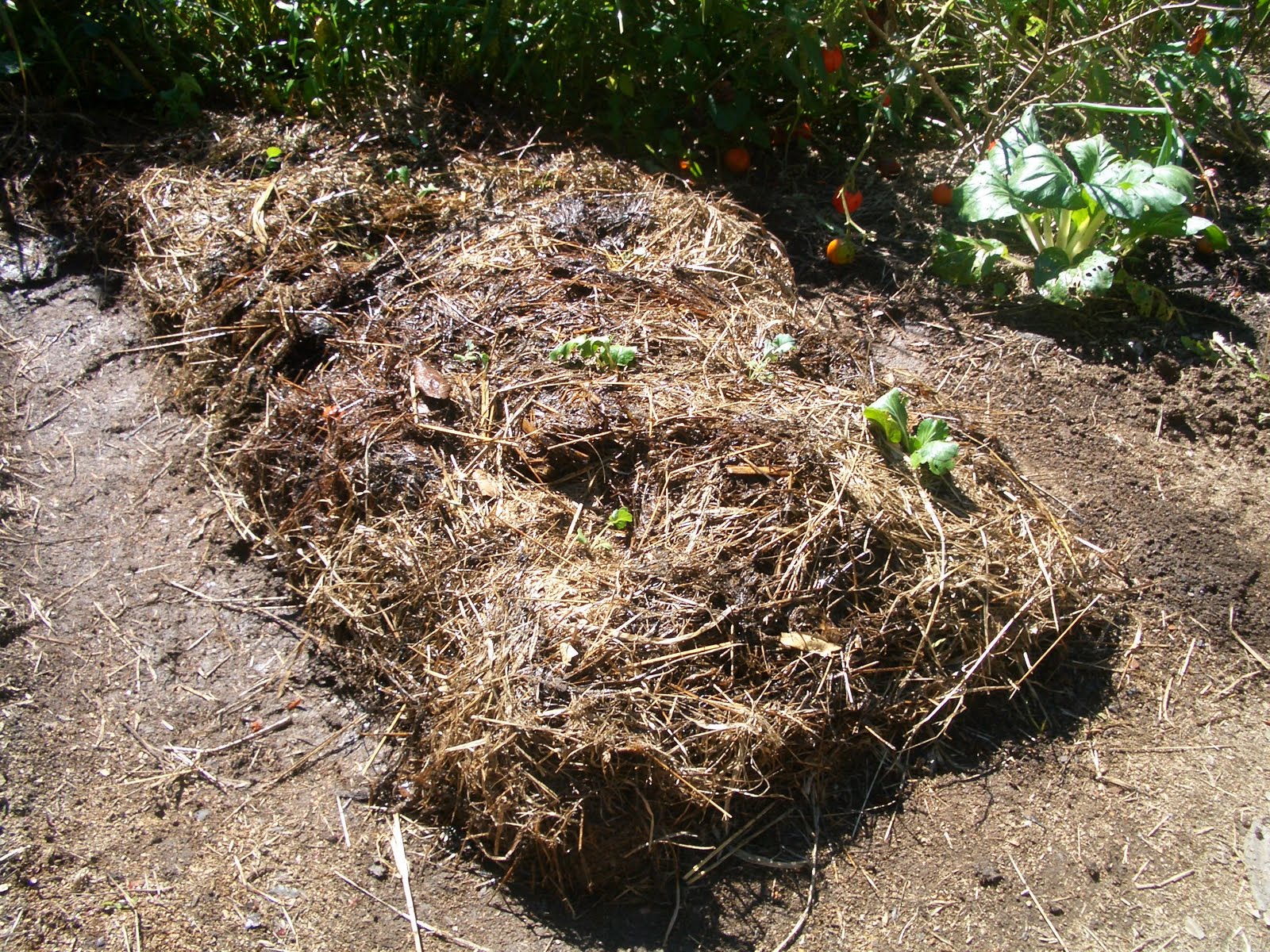
Then we used 2 1/2 wheelbarrow loads of mulch to put on top. Thick, wet mulch, to stop weeds from coming through and taking over the bed.

The mulch also keeps the moisture in the soil by slowing down evaporation, adds fertility and carbon to the soil when it breaks down, retains bio-activity in the compost by not exposing it to the elements and, if applied appropriately, separates the bed from the garden paths.

Our mulch comes from our own property, as does our compost. The compost used in this case came from our worm farm and one of our composting bins. The mulch is grass that we cut on our property.

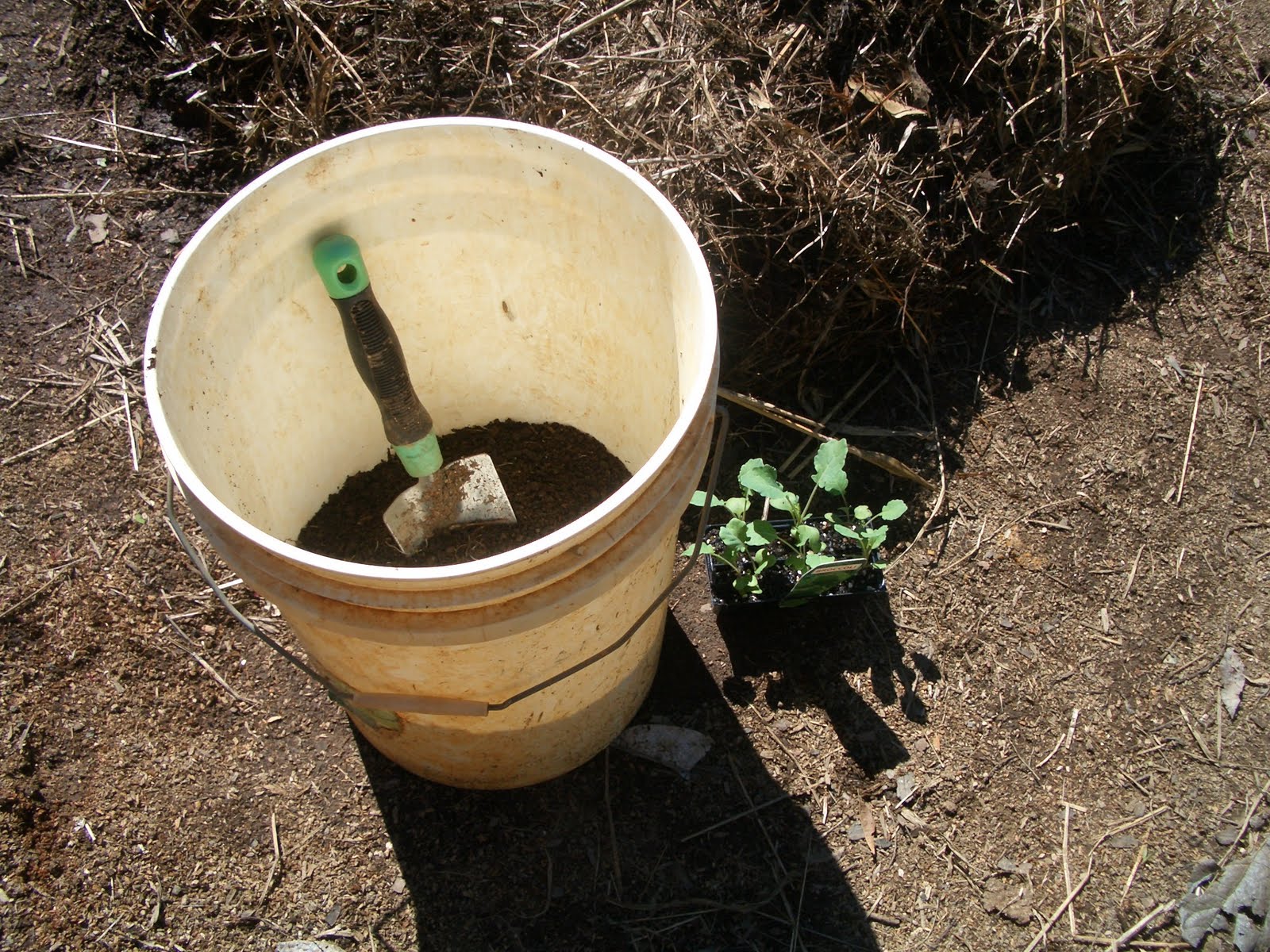
After mulching it is time for some planting. First we got a bucket with some more compost, a small hand shovel and our seedlings.


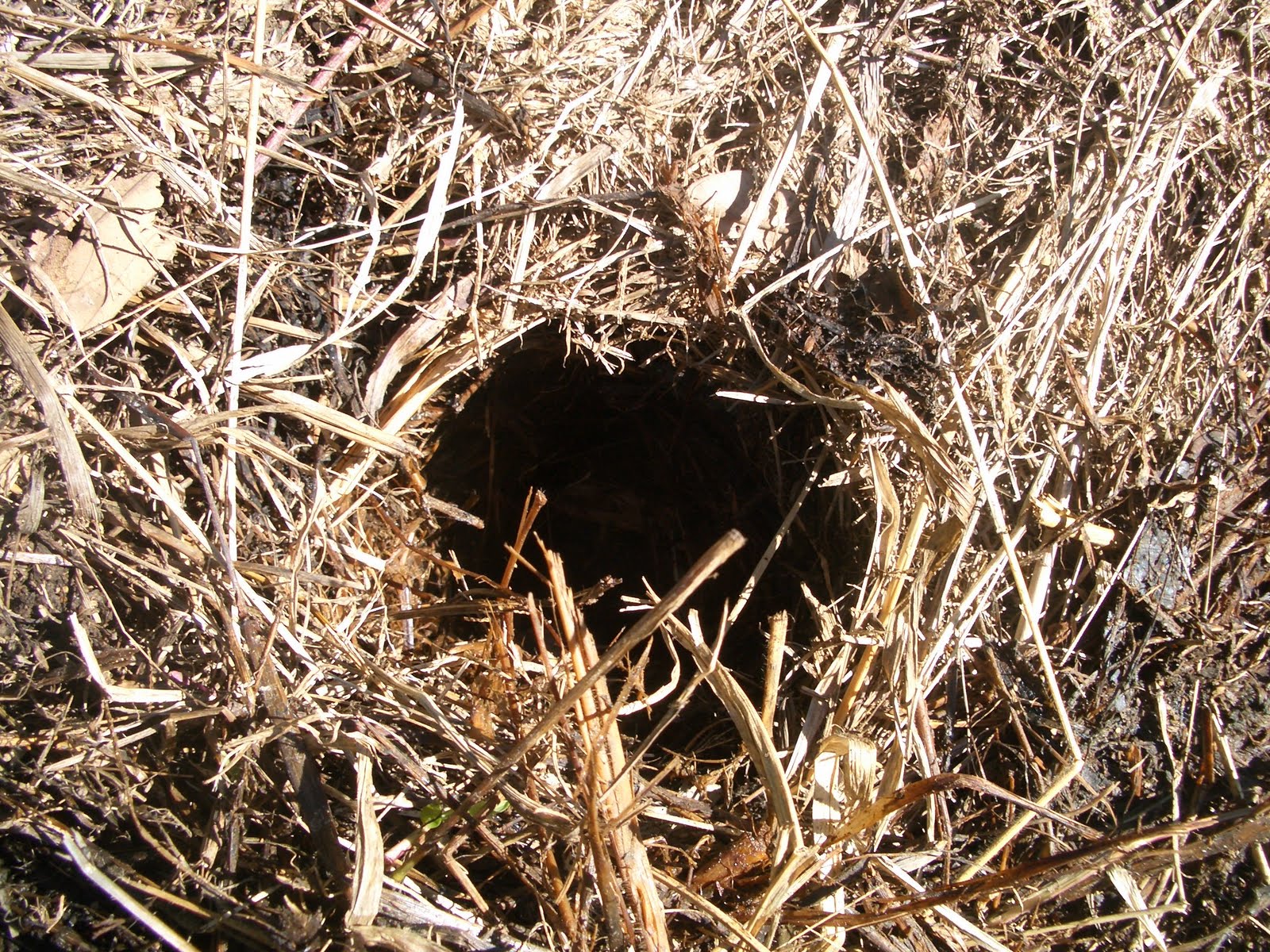
We created a hole in the mulch that went all the way down to where the compost started. We had to make a fairly deep hole, since we added a lot of mulch!
We added more compost in the hole to get the soil level higher, so we could plant our seedlings.
Note that there is a small hole in the middle of the compost to add the seedling. We gently removed a seedling from its punnet and softly massaged its roots to loosen them up a little after being confined in the small space.

The seedling was then added to the hole, some more compost added and then we pulled some mulch as close as possible to the seedling, so there is as little earth exposed as possible (again to prevent weeds from crowding the seedling and to hold moisture in the soil). We ensured the mulch around the seedling was nice and flat so it would not shade the little one.


Since we like variety in our garden beds, we dug up some chinese greens and a salad mallow that had decided to grow in our garden paths. They self sow readily and tend to appear this time of year in inconvenient locations. We planted them into our new bed as well, gave the new bed with seedlings a bit of a soaking, and there it is, ready to grow!

Saturday, March 5, 2011

Use of Biological Resources in Establishing a Food Forest

Part of our Food Forest.
Tom has been planting out our Food Forest over the past few years. We use a Chook Tractor to prepare the soil, they get rid of the weeds and grass seeds for us, and dig the soil up and fertilize (and they still lay eggs too!!). When the soil is prepared enough we move the chook tractor to another spot in the Food Forest that needs to be prepared.

The Food Forest will supply an enormous amount of food, as well as stopping the need for a lawn mower. Grass can't grow where other plants grow, thus reducing root competition between unwanted grasses and the fruit and nut trees we want to promote. Tom plants the borders out with Arrowroot, Lemongrass, Citronella Grass and Galangal, to provide buffers from Bush Turkeys and borders for areas the lawnmower still needs to get to. The borders also provide protection from the elements for the fruit and nut trees.

The prepared soil planted out


Today we planted a mulberry tree, taro, arrowroot, ginger, galangal, tumeric, strawberries, sweet potato, tulsi, pineapple sage and several nitrogen fixing plants, like pinto peanut (ground cover), pigeon pea, ice cream bean tree and cassia. The plants will be chopped and dropped once they have grown a bit, which will supply mulch for and help establish the fruit trees, which are slower growing.
Most of these plants are edible (hence Food Forest) and perform multiple functions. We are directing and accelerating the growth of the Food Forest by planting a variety of plants in addition to fruit and nut trees. The idea is that once the fruit trees have grown up, most of the ground cover and smaller plants will disappear due to lack of light, but they will have created the ideal circumstances for the Food Forest to thrive. The plants stop other invasive, non-beneficial plants from growing and taking the nutrients from the fruit and nut trees. Some plants are planted to house insects which will get rid of other insects that are harmful to the Food Forest trees and plants. Other plants are planted to fix the nitrogen in the soil. Others are there to provide the ideal fungal environment that Food Forest trees thrive on. These fungal conditions remain after some of the smaller plants and ground cover have disappeared.

Of paramount importance is the diversity of our Food Forest. By planting mutually beneficial plants and attracting insects that are beneficial, we will create a micro climate which will be highly productive.

Our happy chooks in tractor

The chooks are happy in their new spot, where they have plenty of grass, seeds and insects to thrive on. In another 3 weeks we will move the tractor again and plant out more seedlings.
We try and propagate our own seedlings from plants we already have on the property, without bringing in any external aids. We do buy some seeds and occasional seedlings at the moment, but we hope that in the future that will not be necessary due to our seed saving and propagating.
Things like pineapple sage and tulsi can be planted directly into the ground by just cutting some stems off an existing plant. They are very hardy and are quick growing in this area. They are very useful herbs (and incredibly easy to plant, just stick them in the ground...)

Our Food Forest in progress, awaiting the next planting in three weeks!!

Thursday, October 21, 2010

Minimising your impact

In trying to minimise our impact on this earth as much as possible, there are a few things we do:
  1. We try to re-use EVERYTHING! Cans, bottles, plastic bags/wrap and anything else plastic, old clothes (as rags) etc. etc.

  2. We try to find building materials which are local or recycled. Tom spent weeks a few years ago pulling down an old building, but he has a lot of good quality, recycled timber out of it. In today's building environment, people are happy to get buildings pulled down without having to pay for it. Usually the land these older buildings are on is worth more to them without anything on it. It is a matter of being at the right place at the right time, but you can always scout around locally for these opportunities.
    Local rock or clay are also great building materials, and can even be found on your own land!

  3. All paper products are recycled, we have an old paper shredder (bought second hand), which shreds the paper and cardboard down enough so it can be used as mulch. Other (smaller) bits of paper can be put in the centre of banana circles, the bananas love it!

  4. Opp shops and second hand shops are a great source for clothing, crockery/cutlery and other household items. Instead of buying paper or plastic party products (plates, cups etc) for parties or get togethers, buy some cheap crockery and cutlery that can be used and re-used (it only uses some water for washing up...). Clothing is always best bought from opp shops, at least you know that even though it may have been made in a sweat shop originally, you do not encourage that sort of behaviour by buying it new. Recycled is cheaper for your wallet and the environment; we westerners throw out a lot of clothes, so our opp shops are plenty AND full!

  5. Grow as much food as you can, in plant and animal form. Milk your cows/sheep/goats and make your own cheese (fetta is very easy and quick to make, even if you are out all day!) and yoghurts. Have some chooks, even in most small backyards you can still have chooks and they love all your food scraps! They give you eggs and manure in return. Try and eat as much from the garden as possible: minimise trips to the supermarket. You can eat simple but still very tasty food.

  6. Anything you cannot grow, buy wholesale or from a farmers market or local farm. Try produce exchanges. Wholesale products mean you need to store things in bulk (you can get food grade buckets from some second hand stores), it also means the packaging will be minimal, so minimal waste. Nuts, seeds, pulses, grains are all things that are not easy to be able to grow in quantities. Either go without or buy in bulk and store.

  7. Aim to have only a couple of small shopping bags of waste every week, if not less. Work towards eliminating waste all together. This can be done by not buying any packaged products.

  8. Ride a bicycle. If you live too far away, or have problems with mobility, research electric bicycles. (They come with solar chargers as well, you may need to search a bit harder for those, but they are available!) Bicycles are the best transport, no emissions, good for your health, no noise and they make you slow down and take in the surroundings. Enjoy your bicycle ride and take your time!

These are only some hints towards the path of minimising your environmental impact. There are a lot more things you can do, that do not cost the earth! All we need to do is to change our mindset. And remember, EVERYTHING you eat, drink, use, wear, build and drive has cost the earth something. The only question is, can that something be easily replaced or does it mean it will be lost forever? Continue questioning every purchase and every action. Awareness is not enough, the time for action is NOW!

Thursday, September 2, 2010

And we thought only monkeys eat bananas...

Our chooks love bananas so much that they do not lay as many eggs if they do not have their regular dose... 
We believe it is due to the potassium in the bananas, which aids the absorption and retention of calcium. The chooks lay better and their eggshells are nice and firm.
We are lucky, since we have an abundance of bananas on our property. 


We have enough to feed ourselves, our chooks AND our dogs... Yes, our dogs love bananas too. They sit under the ripe bunches waiting for one to fall down, so they can get to it before the other dog does... And of course, the birds like the bananas as well, they seem to always get their little bites worth! Bananas seem to be a big hit, and no wonder, because they taste fantastic! Nothing like homegrown and home-ripened bananas.
To improve the laying of chooks and the strength of their egg shell, give them some bananas!


This time of year the mulberries are in season as well. Yumm! We have a reasonable picking every day, just gorgeous!


Hot Banana and Mango with crumble


In a pot put Bananas and Mango (quantity as needed for number of people), same amount of bananas as mango, you may add a little more bananas, as the mango flavour is fairly strong.
Add a can of coconut cream and put on stove until bubbling. Blend with a hand blender in the pot.


In a frying pan, fry some egg and coconut mix (beat eggs, add coconut flour or dessicated coconut). Fry the mix until brown and stir all the time, ensure the mix is reasonably dry when you put it into the pan.


Ladle the hot banana mango mix into a medium size bowl, add the crumble on top. Serve with some yoghurt or (sour) cream. A favourite breakfast of many!
The following was forwarded to me by email:


professor at CCNY for a physiological psych class told his class about bananas.  He said the expression 'going bananas' is from the effects of bananas on the brain.  Read on:


Never, put your banana in the refrigerator!!! 

This is interesting.
 
After reading this, you'll never look at a banana in the same way again.


Bananas contain three natural sugars - sucrose, fructose and glucose combined with fiber. A banana gives an instant, sustained and substantial boost of energy.


Research has proven that just two bananas provide enough energy for a strenuous 90-minute workout. No wonder the banana is the number one fruit with the world's leading athletes.


But energy isn't the only way a banana can help us keep fit.
 It can also help overcome or prevent a substantial number of illnesses and conditions, making it a must to add to our daily diet.


Depression:
According to a recent survey undertaken by MIND amongst people suffering from depression, many felt much better after eating a banana. This is because bananas contain tryptophan, a type of protein that the body converts into serotonin, known to make you relax, improve your mood and generally make you feel happier. 


PMS:
 Forget the pills - eat a banana. The vitamin B6 it contains regulates blood glucose levels, which can affect your mood. 


Anemia :
 High in iron, bananas can stimulate the production of hemoglobin in the blood and so helps in cases of anemia. 


Blood Pressure:
 This unique tropical fruit is extremely high in potassium yet low in salt, making it perfect to beat blood pressure. So much so, the US Food and Drug Administration has just allowed the banana industry to make official claims for the fruit's ability to reduce the risk of blood pressure and stroke.


Brain Power:
200 students at a Twickenham (Middlesex) school ( England ) were helped through their exams this year by eating bananas at breakfast, break, and lunch in a bid to boost their brain power. Research has shown that the potassium-packed fruit can assist learning by making pupils more alert. 


Constipation:
 High in fiber, including bananas in the diet can help restore normal bowel action, helping to overcome the problem without resorting to laxatives. 


Hangovers:
 One of the quickest ways of curing a hangover is to make a banana milkshake, sweetened with honey.. The banana calms the stomach and, with the help of the honey, builds up depleted blood sugar levels, while the milk soothes and re-hydrates your system. 


Heartburn:
 Bananas have a natural antacid effect in the body, so if you suffer from heartburn, try eating a banana for soothing relief.


Morning Sickness:
Snacking on bananas between meals helps to keep blood sugar levels up and avoid morning sickness. 


Mosquito bites:
 Before reaching for the insect bite cream, try rubbing the affected area with the inside of a banana skin. Many people find it amazingly successful at reducing swelling and irritation. 


Nerves:
 Bananas are high in B vitamins that help calm the nervous system. 


Overweight
and at work? Studies at the Institute of Psychology in Austria found pressure at work leads to gorging on comfort food like chocolate and chips. Looking at 5,000 hospital patients, researchers found the most obese were more likely to be in high-pressure jobs. The report concluded that, to avoid panic-induced food cravings, we need to control our blood sugar levels by snacking on high carbohydrate foods every two hours to keep levels steady. 


Ulcers:
 The banana is used as the dietary food against intestinal disorders because of its soft texture and smoothness.. It is the only raw fruit that can be eaten without distress in over-chronicler cases.. It also neutralizes over-acidity and reduces irritation by coating the lining of the stomach. 


Temperature control:
 Many other cultures see bananas as a 'cooling' fruit that can lower both the physical and emotional temperature of expectant mothers. In Thailand , for example, pregnant women eat bananas to ensure their baby is born with a cool temperature.


Seasonal Affective Disorder (SAD): 
Bananas can help SAD sufferers because they contain the natural mood enhancer tryptophan. 


Smoking &Tobacco Use:
 Bananas can also help people trying to give up smoking. The B6, B12 they contain, as well as the potassium and magnesium found in them, help the body recover from the effects of nicotine withdrawal. 


Stress:
 Potassium is a vital mineral, which helps normalize the heartbeat, sends oxygen to the brain and regulates your body's water balance. When we are stressed, our metabolic rate rises, thereby reducing our potassium levels. These can be rebalanced with the help of a high-potassium banana snack. 


Strokes:
 According to research in The New England Journal of Medicine, eating bananas as part of a regular diet can cut the risk of death by strokes by as much as 40%! 


Warts:
 Those keen on natural alternatives swear that if you want to kill off a wart, take a piece of banana skin and place it on the wart, with the yellow side out. Carefully hold the skin in place with a plaster or surgical tape!


So, a banana really is a natural remedy for many ills. When you compare it to an apple, it has four times the protein, twice the carbohydrate, three times the phosphorus, five times the vitamin A and iron, and twice the other vitamins and minerals. It is also rich in potassium and is one of the best value foods around So maybe its time to change that well-known phrase so that we say, 'A banana a day keeps the doctor away!' 


PASS IT ON TO YOUR FRIENDS
 
PS: Bananas must be the reason monkeys are so happy all the time! I will add one here; want a quick shine on our shoes?? Take the INSIDE of the banana skin, and rub directly on the shoe...polish with dry cloth. Amazing fruit 
!!! 


Sunday, August 29, 2010

Walls rock!

When you look at your environment, there are always resources you can use with minimum impact to that environment. A resource found in abundance on our property is rock. We have found rock walls a wonderful way to enhance the garden, stop swale walls from eroding without stopping water flow, holding dirt off a site and to build a building.
Rock is a beautiful but difficult building material, you have to have the time to spend with it. Most of that time is taken to try and find the right rock for the right space. Once the right rock is found, it is put on top of the wall (loose rock wall), or fitted onto the spot and held in place with some wooden wedges (cemented rock wall). In the case of the latter, once enough rocks are in place to warrant making a batch of cement, it is cemented into place and the wooden wedges removed. When the cement is dry, it is scraped to mold nicely around the rock.
The picture above shows a rock wall building in progress. Around the area are a number of rocks waiting to be found so they can be put into the right space...


Some wwoofers enjoyed the rock wall process so much, they returned to our property and stayed to finish a rock wall they had started before they left. It truly is a work of art and is now called: "The Great Wall of Kin Kin"...
This wall stops the erosion of the higher swale wall and stops garden beds from being washed into the swale. Water can still seep through the rock wall into the swale.


If you are interested in finding out more about rock wall building, please contact us. We have regular building courses, rock walls being one of them. Rocks are a beautiful addition to the garden, and seem to fit in beautifully with the surroundings. If you are lucky enough to have natural rock on your property, please start using it! It is a low footprint material with a beautiful feel.